-
A home inspection is a professional, visual evaluation of a residential property's condition at the time of the inspection. It identifies observable defects, safety issues, and maintenance needs, and provides a snapshot of the property's systems and components. An inspection helps buyers make informed decisions, assists sellers in preparing a property for market, and helps homeowners maintain their investment.
Typical components inspected
Exterior
Roof covering (shingles, tiles, metal) — condition, signs of leaks, missing or damaged materials
Flashing, gutters, downspouts — attachment, drainage, evidence of blockage or poor function
Chimney and masonry — visible condition, leaning, cracked mortar, damaged caps
Siding, trim, and exterior finishes — rot, deterioration, secure attachment
Doors, windows, and exterior stains/peeling paint
Grading and drainage — slope away from foundation, signs of standing water
Porches, decks, stairs, railings — structural stability and safety
Roof structure and attic
Roof framing (visible portions) — sagging, structural issues
Attic insulation and ventilation — type, depth, adequacy, signs of moisture
Roof sheathing and visible leaks or stains
Attic access and observable pests or animal damage
Foundation and crawlspace
Visible foundation condition — cracks, settlement, efflorescence
Crawlspace moisture, vapor barriers, ventilation, and support piers
Interior signs of structural movement (cracked walls, doors that stick)
Structural components
Floors, walls, and ceilings — damage, sagging, cracks
Beams, columns, and load-bearing elements (visible portions)
Plumbing system
Water supply pipes and visible fixtures — material, leaks, corrosion
Drain, waste, and vent systems — obvious leaks, drainage issues
Water heater — type, age, condition, venting, signs of leakage
Functional water flow and drainage at fixtures
Visible gas piping and connections (if applicable)
Electrical system
Service entrance, meter, main panel, branch panels — service size, condition, proper labeling
Circuit breakers or fuses — obvious signs of hazards
Receptacles, switches, and GFCI/AFCI protection in required locations
Visible wiring methods and junction boxes (safety and code-related concerns noted where obvious)
Heating, ventilation, and air conditioning (HVAC)
Heating system — type, operation, visible condition, venting
Air conditioning systems — operation, condensers and coils (visible components)
Ductwork — visible condition, connection integrity
Thermostat operation and general performance
Interior components
Doors and windows — operation, seals, locks
Built-in appliances — basic operation (oven, dishwasher, garbage disposal)
Cabinets, countertops, and interior finishes
Stairs, handrails, and safety features
Insulation and ventilation
Insulation levels in accessible areas (attic, crawlspace)
Ventilation systems for attic, bath fans, kitchen venting
Signs of inadequate ventilation or moisture buildup (mold staining, condensation)
Safety items
Visible smoke and carbon monoxide detectors (presence and placement)
Handrails, guardrails, stair safety
Evidence of hazardous materials (limited visual identification: asbestos-like materials, lead paint concerns noted as observations)
Trip hazards, obvious electrical hazards, and other immediate safety concerns
Environmental and specialty concerns (often optional or recommended as separate inspections)
Radon testing
Mold inspection and testing
Pest and termite inspection
Water quality testing
Sewer scope inspection
Asbestos or lead-based paint testing
Solar Panel/Sytem
Meth/Illegal Substance
What an inspection does not do
It is not a code compliance inspection or a guarantee of future performance.
Inspectors do not dismantle systems or perform invasive testing (unless specifically contracted).
It does not typically include detailed engineering analysis or testing for all possible contaminants unless ordered separately.
Report and next steps After the inspection, you receive a written report summarizing findings, photos, and recommended actions or further evaluations by a specialists. Use the report to negotiate repairs, plan maintenance, or prioritize safety improvements.
If you’d like, Red Hills Home Inspections can provide a sample report or outline specific add-on tests (radon, mold, etc.).
-
A solar system inspection is a visual, non-invasive evaluation of a residential solar energy system based on Sprk Home standards and its key components. This includes the panels, mounting systems, roof penetrations, wiring, inverters, and safety disconnects. The goal is to assess installation quality, visible defects, and overall system condition—not to measure exact energy output, but to identify issues that could affect performance, safety, or longevity.
-
A radon test measures radon — a colorless, odorless radioactive gas from soil to assess possible health risk. A monitor or passive device is placed in the lowest livable level of the home for 48 hours to. Results are in pCi/L (Picocurie per Liter); EPA recommends mitigation at long-term averages ≥4.0 pCi/L and considering action at 2.0
-
A home energy report is an evaluation of a home’s efficiency, identifying where energy is lost and how performance can be improved. Based on guidance from the U.S. Department of Energy, it reviews insulation, HVAC, and airflow to help reduce costs, improve comfort, and increase overall efficiency.
-
Using advanced infrared technology during a home inspection allows hidden issues—such as moisture intrusion, insulation gaps, electrical hot spots, and energy loss—to be detected without opening walls or causing damage, providing a powerful
-
Detects the presence of combustible gas leaks near appliances, gas lines, and fittings.
-
Devices used to check outlets, polarity grounding, and GFCI protection to ensure electrical components are functioning properly.
-
Measures levels carbon monoxide gas near fuel-burning appliances.
-
Measures moisture levels in building material to help detect hidden leaks or water intrusion.
-
Allows inspector to safely view and document roof ares and other hard-to-reach locations when direct access is unsafe or limited.
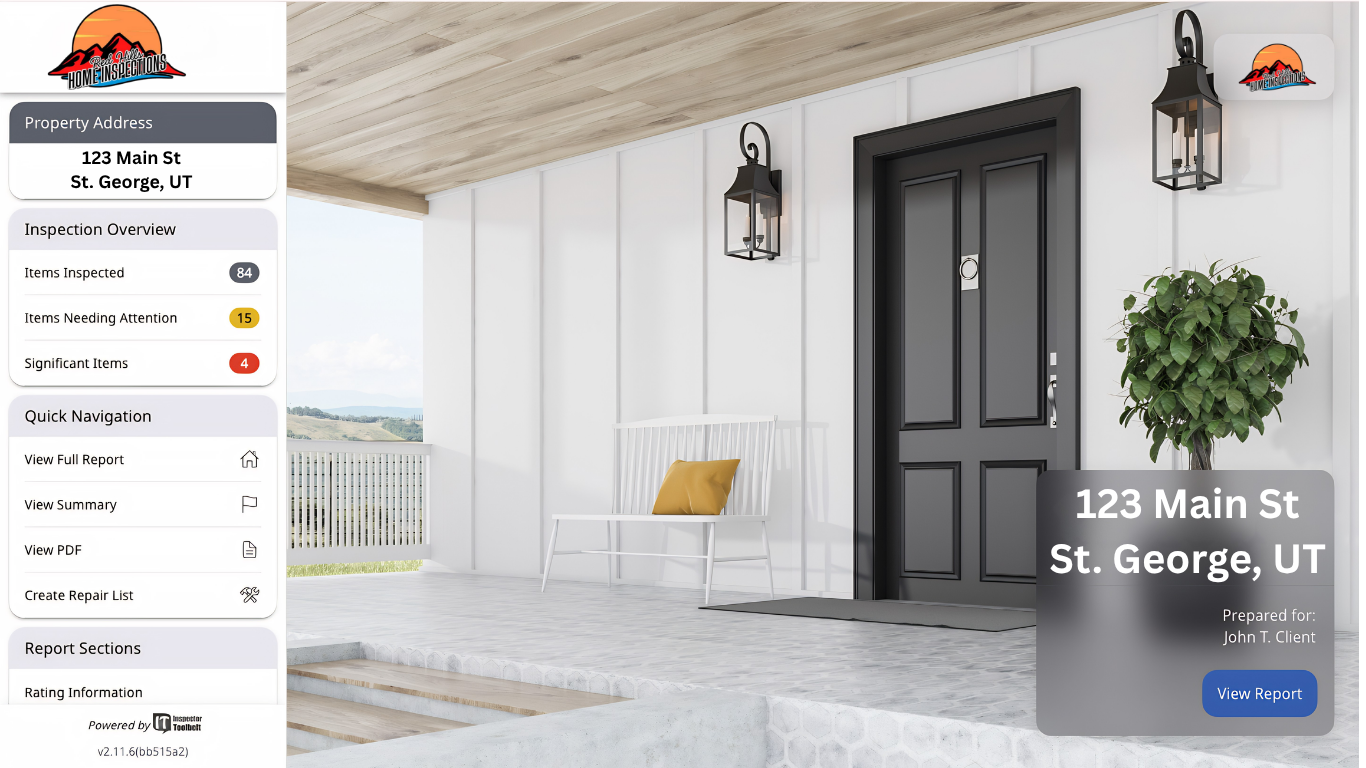
Our inspections go beyond the report to give you confidence in your purchase. If you’re present at the end, we provide a Post-Inspection Walkthrough to review key findings and answer your questions.
You’ll also receive an Red Hills Homeowner Kit that includes:
01
DIY Charcoal Radon Test kit
02
Home Maintenance Guide With Digital Download
03
List Of Local Trusted Vendors Among More…
Qualifications